The idea of having royal blood has long fascinated people across the world. Castles, crowns, and centuries-old dynasties can feel far removed from everyday life—but genealogy experts say the gap may not be as wide as it seems.
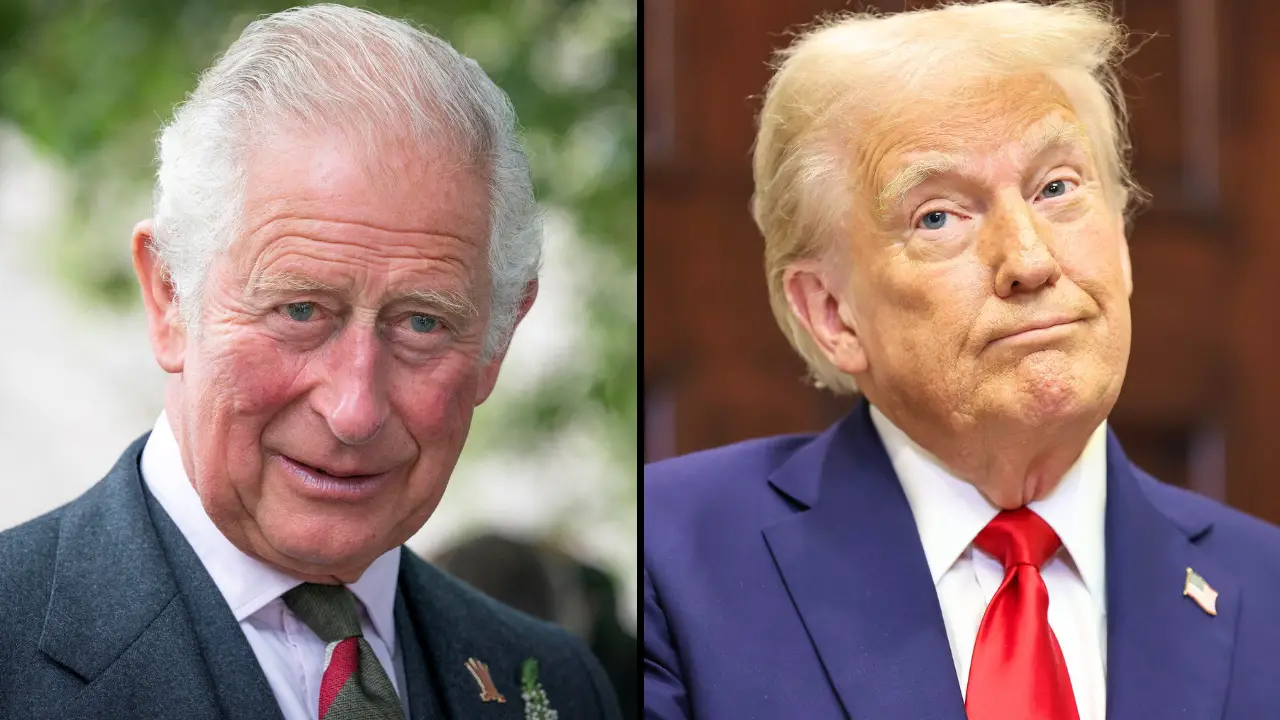
Recent headlines have only fueled that curiosity further, after it was revealed that Donald Trump is distantly related to King Charles III.
The discovery has sparked renewed interest in family history—and in particular, whether something as simple as a surname could hint at royal connections.
Does having a surname mean you have royal blood?
While certain surnames are historically associated with aristocracy or royal dynasties, they are not exclusive. Over centuries, names spread, changed, and were adopted by unrelated families for a variety of reasons.
In many cases, surnames originated from occupations (like Smith or Taylor), locations (such as Hill or Wood), or personal characteristics. Others were linked to powerful families but eventually became more widespread as descendants branched out or as unrelated individuals adopted similar names.
Even surnames directly tied to royal houses—like Tudor, Stuart, or Windsor—do not guarantee a blood connection. These names may indicate a historical association or geographic link rather than a proven lineage.
Genealogy is complex, and true royal ancestry typically requires detailed records tracing family lines across generations. Without that documentation, a surname alone is simply a clue, not confirmation.
That said, the sheer scale of royal family trees means distant connections are surprisingly common. With British royal lineage stretching back over 1,200 years and spanning dozens of generations, it’s entirely possible for modern individuals to share a remote ancestor with the monarchy.
And as one recent discovery shows, even prominent global figures can uncover unexpected royal ties.

Trump’s unexpected royal connection
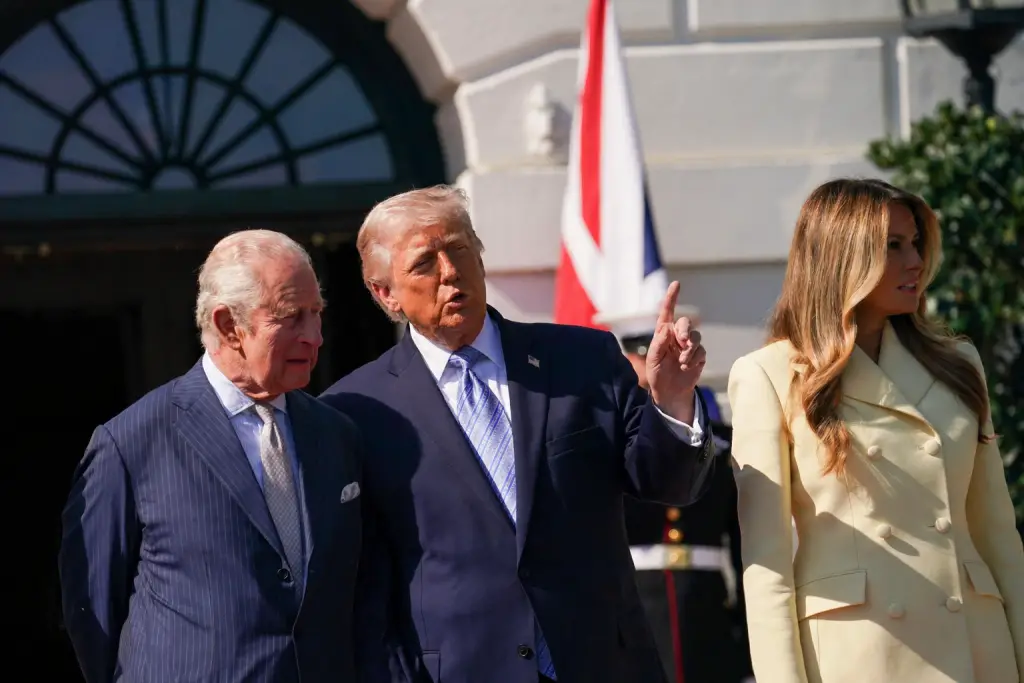
Donald Trump’s link to King Charles III is a striking example of how interconnected family histories can be, per the Mirror.
According to genealogical research, Trump and the King share a common ancestor in the form of the 3rd Earl of Lennox, a Scottish nobleman and descendant of King James II of Scotland.
This connection makes the two men 15th cousins—distant, but undeniably part of the same extended family tree.
The Earl of Lennox lived during a turbulent period in Scottish history and died violently during a power struggle in the 16th century. However, his lineage continued through multiple branches.
One line led to Lord Darnley and Mary, Queen of Scots, whose son became King James I—an important figure in the history of the British monarchy and a direct ancestor of today’s royal family.
Another branch of the family tree eventually led to Mary Anne MacLeod, Trump’s mother. She emigrated from Scotland to the United States in 1930 and later married Fred Trump, passing her ancestral line down to the future president.
This shared lineage places Trump and King Charles within the same extended network of descendants—a reminder that royal ancestry is often far more widespread than people assume.
It also highlights why surname-based lists continue to capture public attention.
Aristocratic surnames with stronger royal associations
Alongside the list of 100, there is a smaller group of surnames that are more directly tied to royal dynasties and aristocratic houses.
These include Windsor, Tudor, Stuart, Plantagenet, Lancaster, York, Spencer, Howard, Seymour, Cavendish, Talbot, Neville, Percy, and Russell, among others.
European royal houses such as Bourbon, Habsburg, Romanov, and Medici also appear in historical records, representing some of the most powerful ruling families in history.
Names like Spencer—famously associated with Princess Diana—or Howard, linked to the Dukes of Norfolk, have clear and well-documented ties to British nobility. Others, like Darcy or Baskerville, are rooted in aristocratic traditions that date back centuries.
Again, these names alone don’t confirm royal descent, but they do offer a stronger starting point for anyone interested in tracing their ancestry.
A reminder of how connected history really is
Ultimately, the fascination with royal surnames speaks to something deeper: a desire to understand where we come from.
The discovery that Donald Trump shares ancestry with King Charles III underscores just how interconnected human history can be. What might seem like distant, elite bloodlines are often woven into the broader fabric of society in ways that aren’t immediately visible.
For most people, uncovering a royal link would require careful genealogical research, piecing together records that span generations. But even without definitive proof, the possibility alone continues to capture the imagination.
Because while a surname might not make you royalty, it could still be the first clue in a much bigger story—one that stretches back through centuries of history, across borders, and into the lives of kings, queens, and everyone in between.
The full list of 100 surnames linked to possible royal ancestry
Genealogy experts have identified a list of 100 surnames that could suggest a distant connection to royal or aristocratic lines. While these names are not definitive proof of royal blood, they often appear in historical records connected to noble families, landowners, or court life.
Here is the full list: Abel, Alden, Appleton, Ayer, Barber, Barclay, Beverly, Binney, Brooke, Brown, Campbell, Carroll, Chauncey, Coleman, Cooper, Davis, Dickinson, Darling, Douglas, Dunbar, Edwards, Ellery, Ellis, Emmett, Evans, Farley, Fleming, Forest, French, Gardiner, George, Gerard, Gerry, Gibson, Graham, Hamilton, Haynes, Herbert, Hill, Howard, Hume, Irving, Jackson, James, Jenkins, Johnson, Kane, Kennedy, Ker, Key, King, Langdon, Lawrence, Lee, Leonard, Livingston, Lloyd, McCall, McDonald, Malcalester, Montgomery, Morris, Morton, Nelson, Nicholson, Nixon, Norris, O’Carroll, Ogle, Opie, Parsons, Patterson, Peabody, Pomeroy, Porter, Pratt, Preston, Quay, Randolph, Read, Reeve, Robinson, Rogers, Sanford, Shaw, Smith, Sowden, Stanley, Taylor, Townsend, Turner, Tyler, Valentine, Varson, Walker, Watts, White, Whiting, Williams, Young.
Many of these names are common today, particularly in English-speaking countries, which reflects how royal and noble bloodlines have spread over time. Families expanded, migrated, and intermarried, gradually dispersing their ancestry across regions and continents.