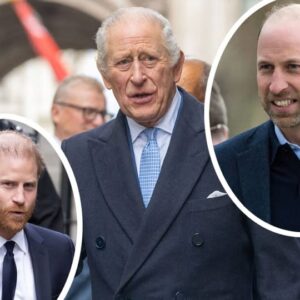
On a crisp Tuesday morning in London, the gates of Buckingham Palace stood as a threshold between the storied past and an uncertain future. April 21, 2026, was no ordinary date on the royal calendar; it marked the centenary of the birth of the late Queen Elizabeth II. For King Charles III, the day was steeped in the quiet gravity of a son honoring a mother, but for the rest of the world, it was a moment to dissect the delicate language of modern diplomacy.
As the King stepped before the cameras to deliver a televised tribute, his words were measured, poetic, and resonant. Yet, beneath the mentions of marmalade sandwiches and Paddington Bear, a single phrase regarding “troubled times” sent ripples through the political landscape. With a historic state visit to the United States looming just days away, many began to wonder if the monarch’s reflection was more than just a eulogy—perhaps it was a subtle commentary on the global stage he is about to enter.
A Century of Legacy: King Charles Honors Queen Elizabeth II
The celebration of what would have been Queen Elizabeth II’s 100th birthday served as a profound reminder of the stability she provided for seven decades. King Charles used the occasion to highlight his mother’s ability to touch lives through both national significance and “fleeting personal encounters.” It was a speech designed to evoke the “marvelous twinkle” of an era that many now view with intense nostalgia.
However, the tone shifted when the King addressed the current state of the world. By stating that much about our modern times would have “troubled her deeply,” Charles leaned into his role not just as a grieving son, but as a sovereign observing a period of significant global friction. This nuance became the center of a media firestorm, particularly as the Royal Family prepares for a high-stakes trip across the Atlantic.
The Transatlantic Bridge: A State Visit to the White House
For the first time since 2007, a British monarch is set to conduct an official state visit to the United States. Between April 27 and April 30, 2026, King Charles and Queen Camilla will travel to Washington, D.C., at the invitation of President Donald Trump. This visit is timed to coincide with the festivities surrounding the 250th anniversary of the United States, a landmark celebration of the enduring bond between the two nations.
The schedule, while still being finalized by Buckingham Palace, includes a “beautiful Banquet Dinner” at the White House on April 28. President Trump, sharing his enthusiasm on social media, noted his “great respect” for the King and predicted the visit would be “TERRIFIC.” Yet, the diplomatic backdrop is complex. Such visits are traditionally carried out on behalf of the UK government, and reports suggest the announcement was carefully timed to follow a period of heightened international tension.

The “Swipe” Theory: Decoding Royal Rhetoric
In the world of royal reporting, no word is chosen by accident. Royal expert Kinsey Schofield, appearing on Sky News, suggested that the King’s mention of “troubled times” was a coded “swipe” at current geopolitical strategies, specifically those involving the United States and recent conflicts in the Middle East.
Schofield hypothesized that the King’s suspected concern for what the Queen would think was a subtle nod to the current administration’s foreign policy. While the Palace remains strictly apolitical, the “swipe” theory suggests that the monarch may be using his platform to advocate for the “brighter dawn” and “goodness” that his mother so famously believed in. Whether this was a direct commentary on President Trump or a general lament regarding global instability remains a subject of intense speculation.

Cultural Significance: The Sovereign as a Moral Compass
Culturally, the British Monarchy serves a unique purpose that transcends politics. The sovereign is often viewed as a “living bridge” to history, providing a sense of continuity that political leaders, with their short terms and shifting mandates, cannot offer. In this context, King Charles’s speech was a masterclass in the “soft power” of the crown.
By invoking the memory of his mother, he reminded the public—and perhaps the political leaders he is about to meet—of a standard of decorum and steady-handedness. The cultural mythos of the Queen as a grandmother to the world makes any statement regarding her hypothetical “troubles” feel like a moral guidance. It suggests that while the King cannot vote or legislate, he can certainly reflect the conscience of the people.

Scientific Perspectives on Language and Perception
From a linguistic and psychological perspective, the interpretation of the King’s speech as a “swipe” is a fascinating study in perception. Cognitive scientists often discuss “confirmation bias,” where listeners interpret ambiguous information in a way that confirms their pre-existing beliefs.
For those who view the upcoming state visit with trepidation, the phrase “troubled times” becomes a weapon. For those who see it as a standard tribute, it is merely a factual observation of the 2026 news cycle. Psychologically, the King’s use of “darling mama” and personal anecdotes serves to “humanize” the institution, making the audience more receptive to his broader messages of hope and prevalence.
Navigating the 250th Anniversary and Modern Diplomacy
The upcoming visit is not just about a dinner; it is about the 250th anniversary of the founding of the United States. This anniversary is a milestone that celebrates the evolution of a colony into a global power and its subsequent reconciliation with the British Crown.
The King’s reported plan to address Congress is a significant diplomatic gesture. It places the monarch at the heart of the American legislative process, highlighting a partnership that has weathered centuries of change. Observers suggest that the goal of this trip is to reaffirm the “Special Relationship” during a time when global alliances are being tested by conflict and economic shifts.

Extraordinary Details and Speculative Outcomes
As the countdown to the Washington visit begins, speculation regarding the “Banquet Dinner” continues to grow. Royal commentators are already debating the following:
The Menu and Decor: Will the White House dinner mirror the grandeur of the 2007 visit, or will it take on a more modern, “American” flair?
The Congressional Address: What themes will the King choose? Many expect a focus on environmental sustainability and the shared history of the two nations.
The “Olive Branch”: Some see this visit as a way for the UK to solidify its position on the world stage following the easing of recent international tensions.
While these details are fascinating, it is important to remember that they remain speculative until the King actually touches down on American soil. The true impact of the visit will be measured not in the headlines of today, but in the diplomatic fruit it bears in the months to follow.

A Reflection on Human Curiosity and the Future
The global obsession with the Royal Family—and the minute-by-minute analysis of a three-minute speech—speaks to a fundamental human curiosity. We are a species that looks for meaning in symbols and guidance in tradition. King Charles III, standing in the shadow of his mother’s 100th birthday, represents that search for meaning.
Whether his words were a “swipe” or a simple prayer for peace, they remind us that the world is always in transition. As the King prepares to meet the President, he carries with him the weight of a century of his mother’s legacy and the hopes of a new era. Our curiosity about their meeting is ultimately a curiosity about our own future: can the old world and the new world continue to find common ground in “troubled times”? If the King’s belief that “goodness will always prevail” holds true, then perhaps that brighter dawn is indeed on the horizon.
Sources and References
Buckingham Palace Official Statements: Transcripts of King Charles III’s televised tribute to Queen Elizabeth II (April 2026).
The BBC: Reports on the scheduling and confirmation of the state visit to the United States.
Sky News: Interview with royal expert Kinsey Schofield regarding the interpretation of the King’s speech.
The White House Press Office: Announcements regarding the U.S. 250th Anniversary celebrations and the upcoming state banquet.
Royal Collection Trust: Historical archives regarding Queen Elizabeth II’s previous state visits to the U.S. in 1957, 1976, 1991, and 2007.